For a number of good reasons, our obstetrician/gynecologists (OB/GYN) are often our (as women) most trusted medical professionals. They are typically present for most of our health milestones–first periods, birth control options, pregnancy, miscarriage and childbirth, and postpartum recovery. Many of us get into a decades-long “relationship” with our OB-GYNs!
Add onto the fact that when we reach around age 40, we are in the busiest time of our lives–often caring for children, elderly parents, and managing teams at work. We are NOT focused on making a major lifestyle change like our most trusted medical professional. Far from it: we want what is easiest, what is “baked in” and what causes the least amount of stress, AKA change.

Yet, a majority of the women who ask me about how to manage the symptoms of perimenopause and menopause don’t actually know there is a specialist who can help them. They don’t realize their OB/GYN, with whom they may have been in a two decade relationship, may need to shift to someone specifically trained in perimenopause and menopause care.
A menopause specialist is a health care professional, typically a Medical Doctor, Doctor of Osteopathy, Nurse Practitioner or Physicians Assistant who has advanced, evidenced-based training in perimenopause and menopause care beyond what is taught in standard medical school or OB/GYN training. In fact, a 2013 study of OB/GYN medical school graduates at Johns Hopkins University found that only 20% of these students felt they received a formal menopause curriculum. The University had made great efforts to change this yet it is not uncommon for OB/GYN practitioners to feel lack of confidence in their approach around menopause.
A visit with a menopause specialist will still include a pelvic and breast exam and all of the discussions we have with our OB/GYNs. But they will also be keenly interested in health post-35 including your comprehensive health history, long-term disease prevention, and are attuned to the complex symptom patterns associated with menopause. They will also focus on your sexual health and the importance of it from perimenopause through our elderly years.
They are focused on your quality of life from here and beyond.
In a few weeks, I will host a webinar on women’s sexual health during perimenopause and menopause. During this time of year, who doesn’t want to snuggle up with their sweetheart without pain, stress and confusion? Yet, many women are struggling through intimacy during this time in their lives and feel shame, guilt, and lack confidence in who to turn to with questions and tears. Sex is a topic those of us who seek a Menopause Specialist can be assured will be part of our visits.
I know, because I’ve been through it myself.

The year was 2015, and I was a hot mess. Sleep was elusive, more weight around my waistline than I’d ever had, I was moody and tense most of the days, AND everything on my body – everything – was dry. I had night sweats. I also was the proud owner of an awesome kick butt strength training gym and wanted to “be a product of my product” of a holistic approach to wellness. But as my son raced the house at night with night terrors, I wondered if I would ever survive this period. No pun.
A good friend who had heard me talk through how I felt enough suggested I seek the help of a menopause specialist. The appointment of my first consultation with a specialist (who no longer practices) began my journey to feeling better than ever, fast forward to now at 58. Back then, she was way more interested in how I felt than my labs. She wanted to know was I sleeping? Was I sexually active? Did my weight creep up for no real reason? How could she help me feel better?
She knew my struggle. She knew perimenopause and menopause. She actually said she didn’t know how I’d made it through my days given my hormone labs which were in the toilet. I was officially diagnosed with Stage Three of Perimenopause (for those that don’t know, there are only four stages!). What?! She said stages one and two can be brutal–for me, they were. She’d seen women like me countless times and she could relate to how I was feeling.
When is the right time to make the switch?
The time will matter because you want to get on top of the symptoms with a professional who can help soften the impending blow of the shifts of your body as a result of the hormonal change. You may even believe you are not in perimenopause because you still have your period.
Here is where I can help. Jump on a call with me so I can explain that yes, you can still have your period AND be in perimenopause. In fact, it is not only possible…it is probable.
If you are experiencing any of the following: heightened anxiety, irregular cycles, hot flashes and night sweats, difficulty falling or staying asleep, or mood changes, it is time. I’d also add that the frustration that your old habits aren’t helping you maintain your weight. This is another often unreported yet common symptom.
Bottom line: If you are in your forties, it is time to switch to a menopause specialist.
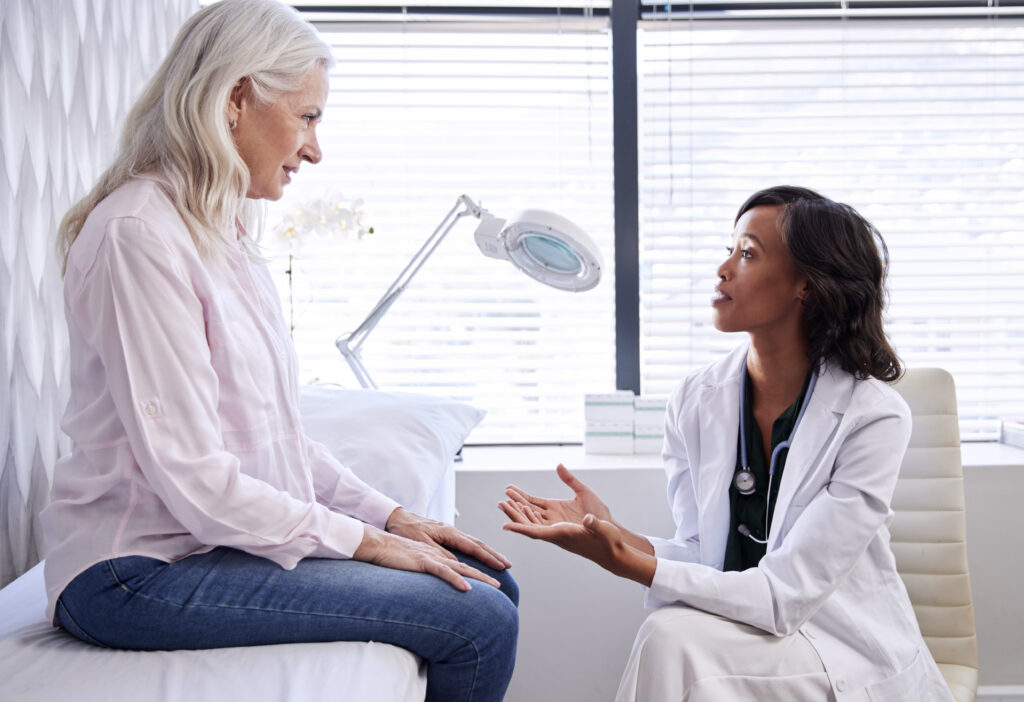
Please note, your OB/GYN may also be a Menopause Specialist. Simply check their bio on their website, or schedule a call with me and I can help you weigh your options.
In summary, here is a quick synopsis of each professional.
An OB/GYN is trained primarily in reproduction, pregnancy, and gynecologic conditions (e.g., fibroids, PCOS, endometriosis). They approach their patients with the traditional approach often centered on pathology, what’s wrong, and how to treat it (often with medications, procedures, or surgery). Menopause may be discussed, but most OB-GYN programs offer minimal formal training in perimenopause and menopause management (often just a few hours).
Menopause specialists have expertise in the hormonal transitions from perimenopause through postmenopause. Their training emphasizes this important phase that comes with many changes to a woman’s body. These changes impact every area of her body. In fact, perimenopause and menopause involve these specialties: Gynecology, Endocrinology, Psychiatry, Neurology, Cardiology, Rheumatology, Dermatology, Urology, Gastroenterology, Dentistry. They view menopause as a metabolic, neurological, and musculoskeletal transition, and not just the end of period.
I really can’t wait for you to continue to approach your health more comprehensively, more thoughtfully, and with confidence.
For more on things that are often under-discussed during menopause, I encourage you to join my upcoming January 23 webinar: “Forgotten” Muscles of Women over 40: Why Sexual Health Deserves Strength Training – A guide to women’s top sexual health struggles and strategies for relief. Sign up through the link today!